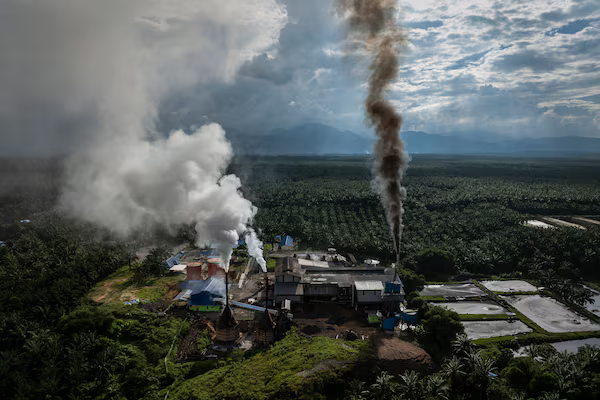
An aerial view of a palm oil processing factory on May 9 in North Sumatra. Indonesia is the world’s top palm oil producer, supplying over 50 per cent of global demand.Ulet Ifansasti/Getty Images
Motorists in Indonesia are modifying their cars to run on subsidized biodiesel amid high global oil prices, as Jakarta raises the fuel’s palm oil content in an effort to reduce the country’s reliance on energy imports.
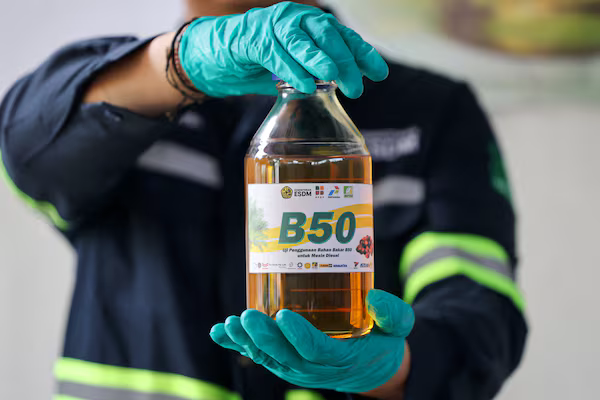
Indonesia, the world’s biggest palm oil producer and exporter, accelerated testing on fuel under its B50 mandate, a blend of 50 per cent palm-based diesel and 50 per cent conventional diesel, after the U.S.-Israeli war on Iran that started in February sent oil prices surging. Jakarta began implementing the B50 biofuel mix on July 1.
A laboratory technician holds a bottle of 50 per cent palm biodiesel fuel during a B50 testing event in Lembang, West Java province, in Indonesia on April 21.Ajeng Dinar Ulfiana/Reuters
High global prices have pushed up the price of conventional diesel, which is not subsidized in Indonesia, by as much as 46 per cent this year. In early July, diesel was 21,150 rupiah (US$1.17) per litre, more than three times the price of subsidized biodiesel at 6,800 rupiah per litre.
Arnoldus Yusuf, a 58-year-old retiree, said he could no longer afford non-subsidized fuel.
“I thought the price was unreasonable, having tripled, and I am retired, so I couldn’t afford it. So we try switching to biodiesel now,” Yusuf told Reuters as he waited for mechanics to make adjustments to his 2018 Toyota Fortuner.
A palm oil plantation in Langkat on May 9 in North Sumatra. Indonesia has aggressively pursued biofuel development in recent years, especially palm-based biodiesel, to boost energy sovereignty and reduce fossil-fuel reliance.Ulet Ifansasti/Getty Images
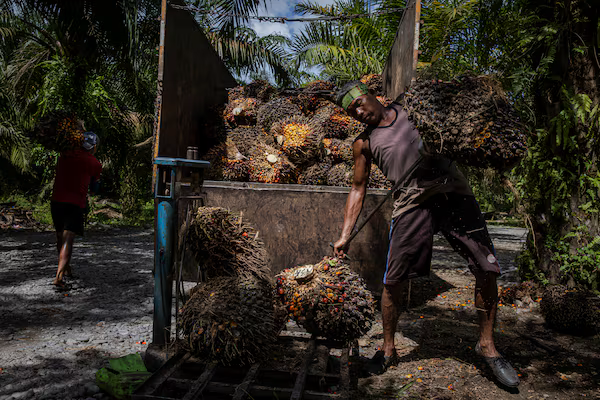
Workers load oil palm tree fruits onto a truck on May 9.Ulet Ifansasti/Getty Images
For 4 million rupiah, the workshop inserted additive fluid to protect the car’s fuel system against corrosion and prevent clogged filters, installed a water separator and reinstalled the car’s computer so the engine-check light would not light up when the car was running on biodiesel.
Things might be difficult for Yusuf, but the B50 program has been a boon for 51-year-old Aong Ulinnuha who owns the garage in Tangerang on the outskirts of Jakarta.
He says he has seen a significant increase in customers because his car modification services are rare. “Because cars that use this fuel will go back to the carshop often,” he said, explaining that cars would need more frequent changes in their fuel filters because biodiesel leaves more sediment than conventional fuel.
The program also faces feasibility challenges as efforts to reach a peace deal in Iran sent oil prices into retreat. Prices of palm oil, which typically trades at a premium to diesel, have also been high, adding to the government’s subsidy bill.
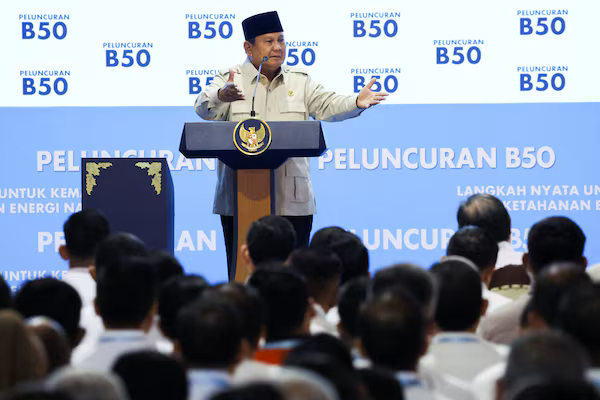
Indonesian President Prabowo Subianto marks the start of the B50 biodiesel program on July 9.Ajeng Dinar Ulfiana/Reuters
Still, the government counts B50 as a win. At an official launch on Thursday, President Prabowo Subianto said the half-half blend was “an extraordinary achievement for the nation.”
“We shall continue. Don’t stop at B50. Maybe we can reach B60,” Prabowo said.