

Malaysia strengthens economic foothold in Nigeria with $664m export growth amid palm oil rally
Malaysia’s exports to Nigeria rose by 20.7% in 2025, reaching a valuation of $664 million. This growth underscores strengthening bilateral ties and a deepening economic engagement between the two nations within an increasingly volatile global trade environment.
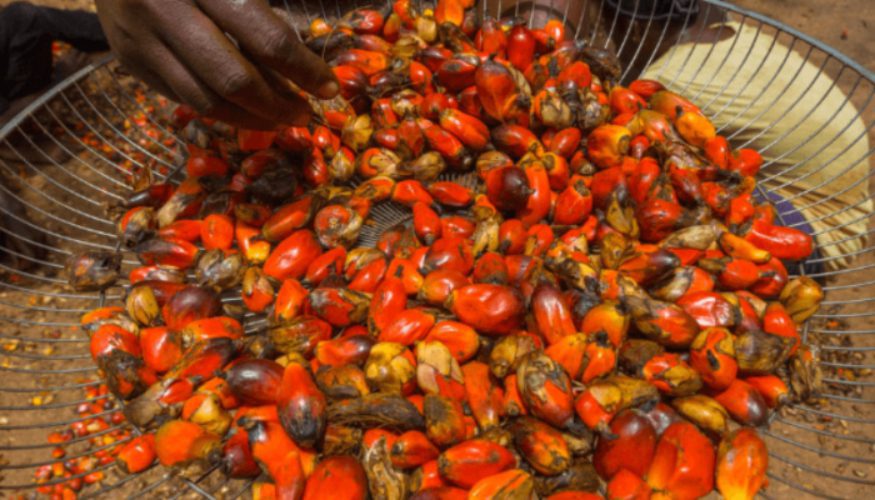
The upward trajectory was primarily propelled by a 33.7% increase in the export of palm oil and palm oil-based agricultural products. Other significant contributors included a remarkable surge in transport equipment — which saw growth of 1,260% — alongside machinery, equipment, and parts (44.8%), and processed food (28.1%).
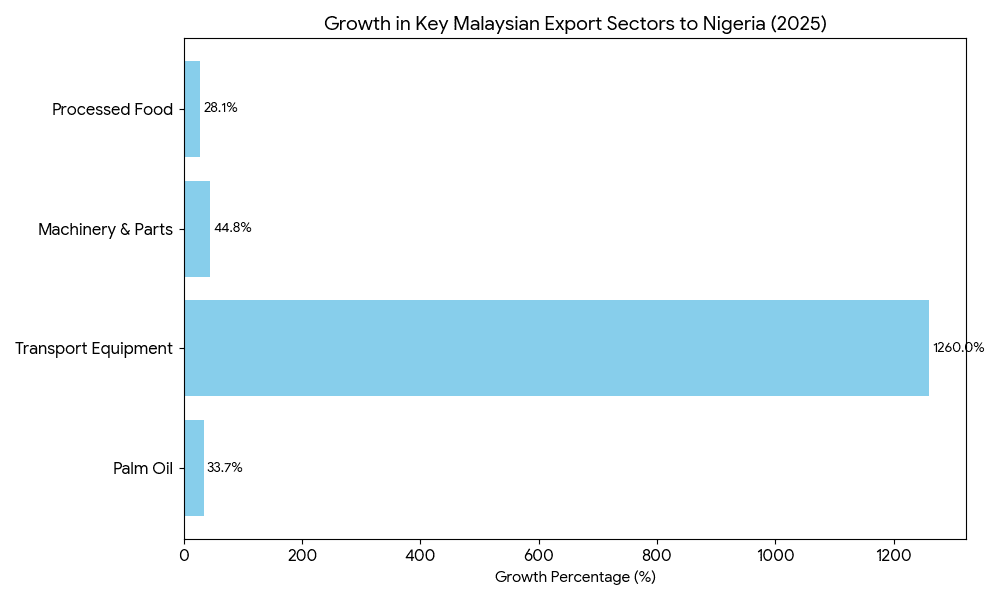
chart highlights the exponential growth in specific export sectors, most notably transport equipment.
Strategic Import-Export Dynamics and Market Positioning
According to a statement issued by Jude Bryan S. Dass, Trade Counsellor at the High Commission of Malaysia in Lagos, Malaysia’s primary imports from Nigeria during the same period were dominated by agricultural products (54.7%) and petroleum products (22.9%). Metalliferous ores and metal scrap accounted for 10.3%, while crude petroleum constituted 4.3% of the import volume.
Total bilateral trade between the two countries reached $1.23 billion in 2025. This performance solidifies Nigeria’s position as Malaysia’s fourth-largest trading partner in Africa and its 43rd globally, providing a robust foundation for future strategic cooperation.
Agricultural Collaboration and Palm Oil Development
Aiyub Omar, the High Commissioner of Malaysia to Nigeria, welcomed the positive data, noting that Malaysian firms are shifting beyond simple commodity exchange toward active participation in Nigeria’s priority sectors. A key focus remains the development of the Nigerian palm oil industry through technology transfer and technical services.
Malaysian entities are currently involved in managing approximately 151,800 hectares of oil palm plantations across Nigeria. This involvement spans Build-Operate-Transfer (BOT) arrangements and infrastructure development, supporting Nigeria’s long-term ambition to reclaim its status as a leading global palm oil producer.
Expanding the Halal Ecosystem and MIHAS 2026
The High Commissioner further identified the Halal industry as a critical frontier for collaboration. With Malaysia’s global Halal exports projected to reach $18.98 billion by 2030, there is significant room for Nigeria to integrate into this ecosystem. The upcoming Malaysia International Halal Showcase (MIHAS), scheduled for 23–26 September 2026, is expected to serve as a primary vehicle for this partnership.
The previous iteration, MIHAS 2025, facilitated over 4,000 business meetings and generated $1.53 billion in sales. Trade Counsellor Jude Bryan S. Dass noted a burgeoning interest from Nigerian buyers and exhibitors for the 2026 event, following a strong showing from West African representatives in the prior year.
Healthcare and Medical Tourism as New Growth Frontiers
Beyond commodities, Malaysia is positioning itself as a premier destination for Nigerian medical tourists. With Nigerians estimated to spend between $1.5 billion and $3 billion annually on healthcare abroad, Malaysia offers a cost-competitive alternative to traditional hubs such as India and the United Kingdom.
Malaysia’s medical tourism sector, valued at approximately $87.35 million, is projected to expand to $2 billion by 2030. Supported by a robust network of 194 private hospitals, the country offers specialised expertise in gastroenterology, surgical oncology, orthopaedics, and fertility treatments, presenting a high-value opportunity for Nigerian patients seeking advanced care.